Cutting Out the Middleman: How Architecture Firms Are Forging Their Own Material Networks
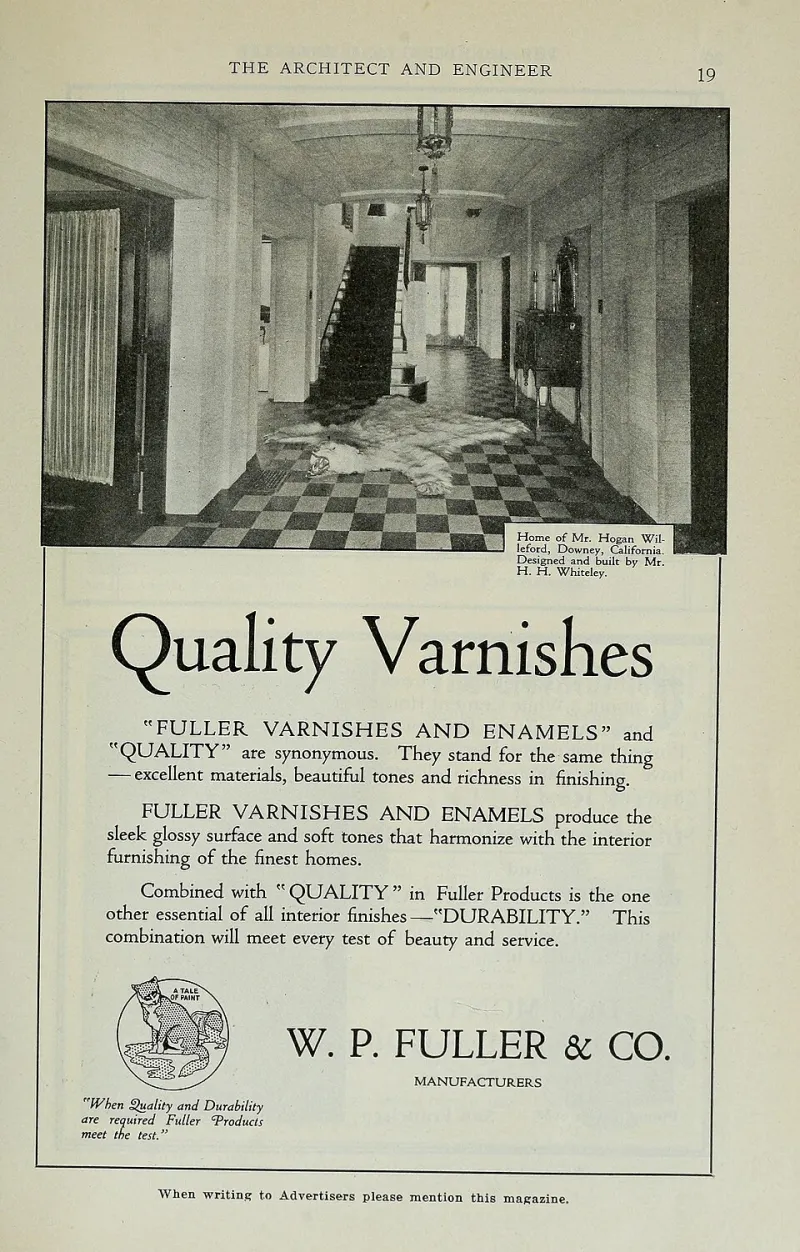
Photo: Internet Archive Book Images, No restrictions, via Wikimedia Commons
For decades, the relationship between architects and material suppliers operated on a familiar, if sometimes frustrating, set of terms. Architects specified; distributors delivered; contractors installed. The system was imperfect but functional — until it wasn't. A convergence of supply chain disruptions, aggressive industry consolidation, and a surge in value engineering pressures has pushed that arrangement to a breaking point. Now, a cohort of forward-thinking American firms is doing something once considered far outside the architect's purview: building their own supply chains from the ground up.
The implications extend well beyond logistics. When a firm controls the sourcing of its materials, it reclaims a degree of creative and professional authority that the traditional procurement model has steadily eroded. The question is no longer simply where materials come from — it is who, ultimately, holds the pen on the final built work.
A System Under Strain
The pressure on conventional procurement channels has been building for years, but recent cycles have accelerated the tension considerably. Material suppliers across categories — from specialty glazing to custom millwork to engineered stone — have undergone significant consolidation, leaving architects with fewer vendors, less competitive pricing, and diminished leverage when specifications come under challenge during construction.
Lead times that once spanned weeks have stretched to months, and in some cases longer, forcing project teams to make specification decisions far earlier in the design process than sound practice would otherwise dictate. The knock-on effect is predictable: when a specified product becomes unavailable mid-project, the substitution that fills the gap rarely meets the original design intent. Finishes shift. Tolerances change. The cumulative effect on a project's spatial and material character can be significant.
For many firms, this pattern has become routine enough to feel structural rather than situational. And structural problems tend to demand structural responses.
The Direct Partnership Model
One of the more consequential shifts underway involves firms establishing direct relationships with manufacturers — bypassing the distributor tier entirely and negotiating terms that prioritize design fidelity over cost compression. Several mid-size practices on the East and West Coasts have begun formalizing these arrangements, in some cases co-developing proprietary products with manufacturers willing to work at lower volumes in exchange for guaranteed specification across a firm's portfolio.
This model carries real advantages. When a manufacturer understands a firm's design vocabulary and has a financial stake in consistent specification, the incentive to accommodate substitution requests diminishes. The architect's voice in the material conversation becomes structurally reinforced rather than merely advisory.
The arrangement is not without complexity. Smaller manufacturers may lack the capacity to scale with a firm's workload, and exclusivity agreements can introduce procurement rigidity that complicates multi-contractor project delivery. Firms pursuing this path have found that success depends heavily on selecting manufacturing partners with both technical capability and a genuine alignment of values around craft and precision.
Local Sourcing Networks as a Strategic Asset
A parallel trend involves the deliberate cultivation of regional sourcing networks — a practice that combines supply chain resilience with a design ethos increasingly valued by clients in both the commercial and institutional sectors. Rather than relying on national distributors whose inventory reflects broad market demand, these firms have mapped the material landscape within a defined geographic radius and built relationships with local fabricators, quarries, mills, and artisan producers.
The benefits are multiple. Lead times compress. Carbon footprints shrink, a consideration of growing importance to clients pursuing sustainability certifications. And the materials themselves often carry a regional character that enriches the specificity of a project's architectural identity — something no catalog product can replicate.
Firms in the Pacific Northwest have leveraged proximity to timber resources and a robust culture of wood craftsmanship to develop sourcing networks that give their work a material coherence difficult for competitors to match. Similar dynamics are playing out in the Mid-Atlantic, where reclaimed brick and regional masonry traditions are being reintegrated into contemporary practice through deliberate sourcing partnerships with local salvage and fabrication operations.
The In-House Fabrication Lab
Perhaps the most ambitious expression of this movement is the emergence of in-house fabrication capabilities within architecture firms themselves. A small but growing number of practices have invested in CNC routing equipment, metal fabrication tools, and digital knitting or textile systems — bringing the production of key architectural components directly under the firm's roof.
This is not an entirely new phenomenon; firms with strong craft orientations have long maintained workshop spaces. What is new is the scale of ambition and the explicit framing of fabrication capacity as a competitive and creative differentiator. When a firm can prototype and produce custom components internally, it gains a degree of specification control that no supplier relationship can fully replicate.
The investment required is substantial, and the operational model demands careful management. Fabrication labor, equipment maintenance, and material inventory introduce overhead structures that differ fundamentally from those of a conventional design practice. Several firms have addressed this by positioning their fabrication operations as semi-independent entities capable of taking on commissions from other architects or designers — turning a strategic investment into a modest revenue stream.
What This Means for the Profession
The firms pioneering these approaches are not simply solving a logistics problem. They are making a philosophical argument about what architectural practice should look like — and who should hold authority over the material realization of design intent.
The traditional procurement model implicitly positions the architect as a specifier rather than a producer: someone who describes what should exist and then relies on an extended chain of commercial actors to bring that description to life. Every link in that chain represents a potential point of dilution. Direct manufacturing partnerships, regional sourcing networks, and in-house fabrication all represent efforts to shorten or eliminate those links.
There are risks in this posture. Firms that vertically integrate procurement responsibilities take on obligations that extend beyond design and documentation. Vendor relationships require active management. Fabrication operations require technical expertise. The administrative burden is real.
But for practices committed to the integrity of their work, the calculus is shifting. In a procurement environment where substitution is the norm and specification is increasingly treated as a starting point for negotiation rather than a binding professional judgment, the firms willing to invest in controlling their own material destinies may find themselves with a meaningful and durable advantage — both in the quality of what they build and in the strength of the client relationships they sustain.
The spec sheet, it turns out, is only as powerful as the supply chain behind it. The firms that understand this are no longer waiting for the industry to change. They are building something different entirely.