Who Signs the Drawing? Navigating Professional Liability in the Age of AI-Assisted Design

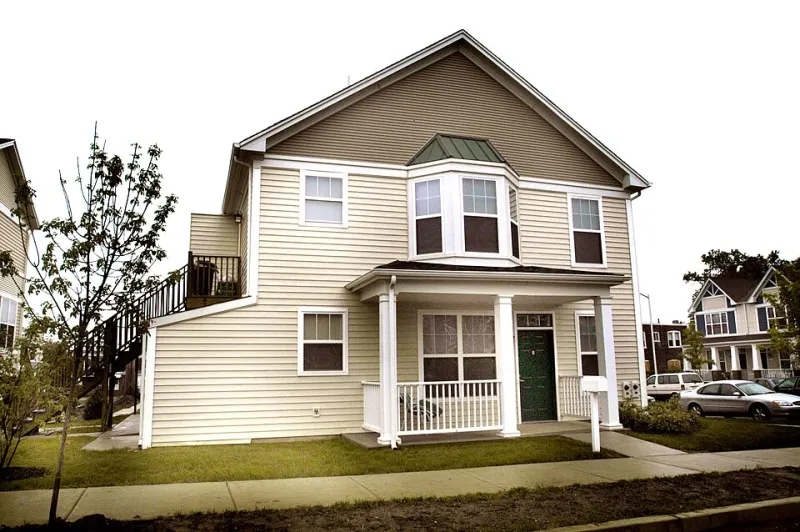
Photo: Nader Soubra, CC BY 4.0, via Wikimedia Commons
For most of architectural history, the stamp on a set of construction documents carried a straightforward meaning: a licensed professional had reviewed, coordinated, and accepted responsibility for every line on the sheet. That compact between architect and public—codified in state licensing boards, professional liability insurance policies, and decades of case law—was built on the assumption that a human mind had made every consequential decision.
Artificial intelligence is quietly dismantling that assumption. As generative design tools, large language models trained on building codes, and AI-driven structural optimization platforms become embedded in everyday workflows, the question of who is ultimately responsible for a design is no longer purely philosophical. It is a liability question—and right now, the answer is almost certainly the architect.
The Legal Vacuum Surrounding Algorithmic Output
American law has not yet produced a definitive framework for AI-generated professional work product. The National Council of Architectural Registration Boards (NCARB) has begun examining the issue, and several state licensing boards have issued informal guidance, but nothing approaching uniform regulation exists. What does exist—clearly and unambiguously—is the professional standard of care.
Under that standard, an architect is expected to exercise the skill and judgment that a reasonably competent practitioner would apply in similar circumstances. Courts and insurers do not distinguish between a design decision made by a human drafter and one surfaced by a generative algorithm. If an AI tool proposes a structural configuration that a licensed architect then incorporates into construction documents without adequate independent review, and that configuration later contributes to a failure, the architect bears the exposure.
"The tool doesn't hold a license," notes the standard refrain from professional liability underwriters. "The licensee does."
Intellectual Property: A Second Front of Uncertainty
Liability for physical outcomes is only one dimension of the risk landscape. Intellectual property ownership presents a parallel set of complications that firms are only beginning to confront.
The U.S. Copyright Office has repeatedly declined to register works produced autonomously by AI systems, affirming that copyright protection requires human authorship. For architects, this creates an uncomfortable ambiguity: if an AI tool generates a substantial portion of a design's formal language, the firm's ownership of that design—and its ability to defend that ownership against infringement—may be weaker than it appears.
Additionally, most commercial AI platforms include terms of service that grant the software provider broad rights over inputs and, in some cases, outputs. Firms uploading proprietary project data, client program requirements, or site-specific information to cloud-based AI tools may inadvertently be licensing that information to a third party. Few architecture practices have updated their client contracts or their internal data governance policies to address this reality.
What Insurers Are Watching
Professional liability carriers—the underwriters of errors and omissions (E&O) policies that most architecture firms carry—are paying close attention. Several major insurers active in the design professional market have begun asking firms, during renewal interviews, whether and how they are using AI tools. The answers matter.
Insurers are particularly focused on two behaviors: over-reliance and under-documentation. Over-reliance occurs when a firm accepts AI output without subjecting it to the same critical review it would apply to work produced by a junior staff member. Under-documentation occurs when firms fail to record what AI tools were used, which outputs were incorporated, and what independent verification was performed.
Both behaviors increase the likelihood of a covered claim and, more troublingly, could provide a carrier with grounds to contest coverage in the event of a loss. Firms that cannot demonstrate a coherent, documented process for reviewing AI-generated content may find that their E&O policy offers less protection than they assumed.
Building a Risk-Aware AI Workflow
Practical risk management in this environment does not require abandoning AI tools—nor should it. The productivity and creative benefits these platforms offer are real and growing. What it requires is deliberate process design.
Firms should begin by conducting an inventory of every AI tool currently in use across the practice, including tools adopted informally by individual staff members. For each tool, the firm should assess what data is being shared with the platform, what rights the platform's terms of service claim over that data, and whether the tool's outputs are subject to meaningful human review before being incorporated into deliverables.
From that inventory, firms can develop a written AI use policy that addresses documentation standards, review protocols, and client disclosure. On the question of disclosure, the profession has not yet reached consensus, but a growing number of risk management advisors recommend informing clients when AI tools play a material role in the design process—both as a matter of transparency and as a contractual protection.
Contract language itself deserves scrutiny. Standard AIA contract forms were not drafted with AI-assisted design in mind. Firms should work with legal counsel to evaluate whether existing indemnification provisions, limitation of liability clauses, and ownership-of-instruments-of-service language adequately reflect the realities of algorithmically assisted practice.
The Ethical Dimension Regulators Will Reach Eventually
Beyond insurance and contracts lies a question of professional ethics that the architecture community will need to answer on its own terms before regulators answer it externally. The profession's codes of ethics—including those maintained by the American Institute of Architects—emphasize competence, honest representation, and the architect's duty to protect public health, safety, and welfare. AI tools that are opaque in their reasoning, trained on datasets of uncertain provenance, or prone to producing outputs that reflect biased or incomplete information present genuine challenges to each of those obligations.
Some of the most forward-looking firms are already establishing internal ethics review processes for AI adoption, evaluating new tools not only on capability and cost but on transparency, auditability, and alignment with the firm's professional obligations. This kind of deliberate institutional stance—rather than ad hoc tool adoption—is likely to become a differentiator as clients, insurers, and regulators grow more sophisticated in their expectations.
The Stamp Still Means Something
The architectural profession has navigated technological disruption before—from hand drafting to CAD, from physical models to BIM. Each transition reshaped practice without erasing the fundamental accountability that comes with professional licensure. AI represents a more complex challenge, in part because it can simulate judgment in ways that previous tools could not, and in part because the legal and regulatory environment is genuinely unsettled.
But the core principle has not changed. When a licensed architect affixes a stamp to a set of documents, that act represents a professional commitment that no algorithm can assume. Firms that internalize this—and build their AI workflows accordingly—will be better positioned to capture the benefits of these tools while protecting the practices they have built.
The liability trap is real. So is the path around it.